What is Mounjaro (Tirzepatide)?
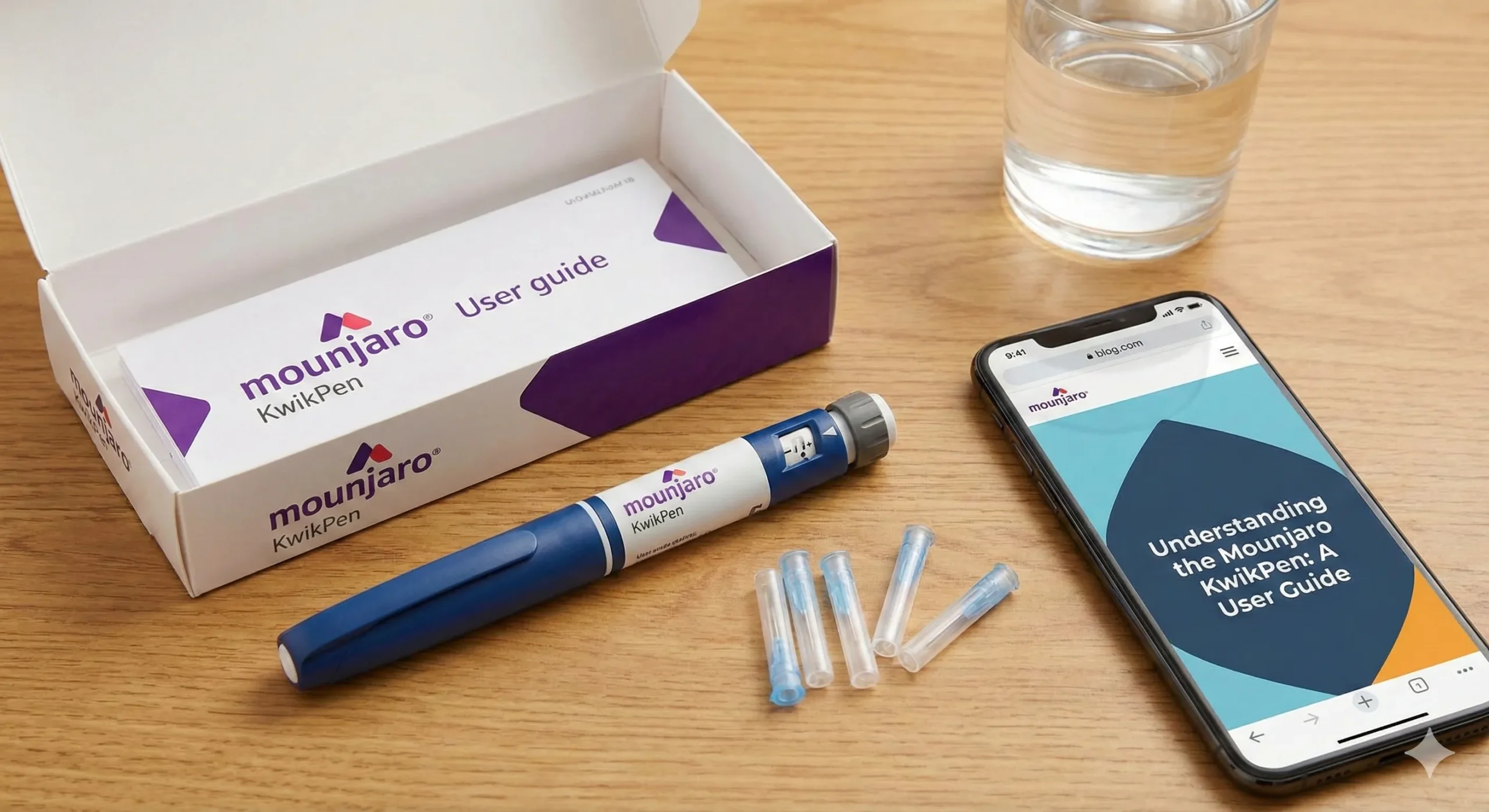
Mounjaro is the brand name for tirzepatide, a medicine given as a once-weekly injection from a pre-filled pen. It was first licensed for type 2 diabetes, and is now also licensed in the UK for weight management. It is a prescription-only medicine, which means nobody in the UK can lawfully supply it to you until a prescriber has assessed you.
Disclaimer: PenCompare is an independent comparison platform. This guide is for information only. It is not medical advice, not a recommendation to take any medicine, and no substitute for an assessment by a qualified prescriber.
On this page
What Mounjaro actually is
Mounjaro is a trade name. The medicine inside it is tirzepatide, and that is the word worth holding on to, because it is what tells you whether two products you are comparing are the same thing. Tirzepatide was licensed first for type 2 diabetes and later for weight management, which is why you will find it described both ways depending on where you read about it.
It is supplied as a pre-filled pen and taken once a week, on the same day each week, by injection under the skin. Treatment normally starts at a low dose and increases in steps under the prescriber’s direction. The step-up is not a formality: it is how the prescriber manages side effects, and it is the reason the dose you eventually take is not something you choose from a price list. Our Mounjaro dosage guide sets out the six strengths and the usual interval between them.
How it works, and why it is described as two hormones
Tirzepatide imitates two hormones the body already produces. Most of the other weight-management pens on the UK market imitate one. That difference is the whole of what “dual agonist” means, and it is the reason tirzepatide is not simply a stronger version of the medicines it sits next to in a comparison table.
-
GLP-1
Glucagon-like peptide-1 — reduces appetite and slows the rate at which the stomach empties
Also the mechanism behind semaglutide and liraglutide pens -
GIP
Glucose-dependent insulinotropic polypeptide — works alongside GLP-1 to change how the body handles sugar and fat
The part tirzepatide adds
Acting on two receptors rather than one does not make a medicine automatically better for a given person. Suitability depends on your medical history, what else you take, and what you and a prescriber are trying to achieve. A mechanism is a description, not a recommendation.
What the clinical trials measured
The trial usually quoted is SURMOUNT-1, published in the New England Journal of Medicine in 2022. Participants taking the highest dose alongside lifestyle support lost an average of about 22.5% of their body weight over 72 weeks. For someone starting at 100kg, that average corresponds to roughly 22.5kg.
Three things are worth saying plainly about that number, because it is the one most often repeated without them:
- It is an average across a trial population. Individual results in the same trial ranged widely in both directions, and an average is not a forecast for any one person
- It was measured at the highest dose, over 72 weeks, with diet and activity support running alongside. Shorter treatment, a lower dose, or the medicine on its own are not the conditions that produced it
- Trial conditions include monitoring and follow-up that ordinary treatment may not match
Who it is prescribed for in the UK
For weight management, tirzepatide is generally considered for adults who meet a body-mass-index threshold:
- A BMI of 30 or above
- A BMI of 27 or above together with a weight-related health condition, such as pre-diabetes, raised blood pressure or raised cholesterol
Meeting a threshold is where an assessment starts, not where it ends. A prescriber also has to consider your medical history, any other medicines you take, and whether treatment is appropriate at all. There are people for whom it is not. If a service issues a prescription without asking anything capable of changing that answer, the questionnaire is a checkout step rather than an assessment — and our guide to buying medicines online safely sets out what a real one looks like.
At a glance
- Active ingredient: tirzepatide
- Form: pre-filled pen, injected under the skin
- Frequency: once weekly, same day each week
- Class: dual GLP-1 and GIP receptor agonist
- Legal status: prescription-only medicine (POM)
- Average weight change in SURMOUNT-1: about 22.5% at the highest dose over 72 weeks
If you already have a prescription and want to see what UK providers charge, our Mounjaro price comparison lists the complete cost for each dose, including consultation and delivery fees, alongside the date each price was last checked. We are a comparison service, not a pharmacy, and we do not supply medicines.
Frequently asked questions
Sources
- Mounjaro summary of product characteristics, electronic medicines compendium
- Jastreboff AM and others, Tirzepatide once weekly for the treatment of obesity (SURMOUNT-1), New England Journal of Medicine, 2022