Wegovy Dosage Guide
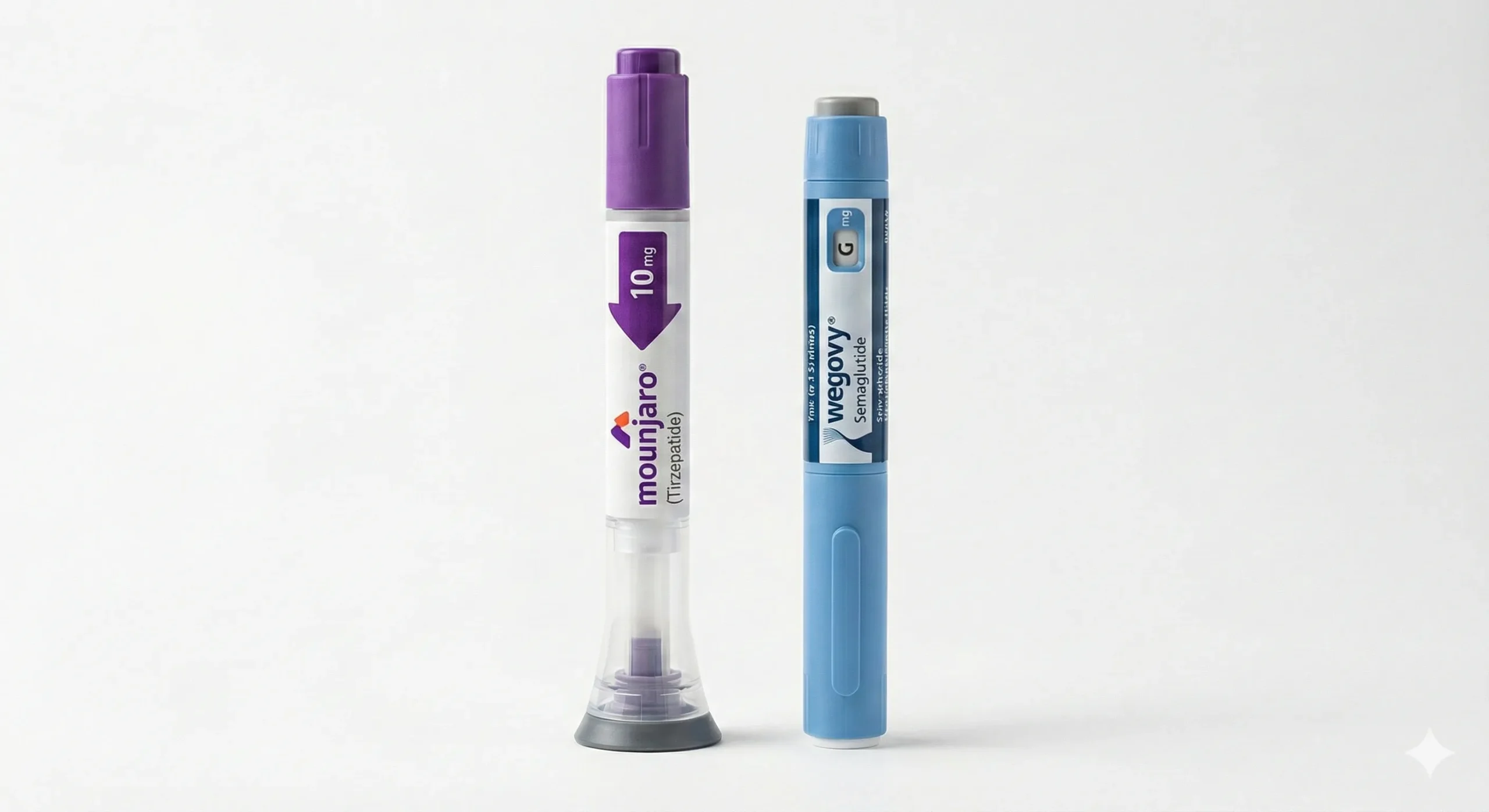
Wegovy is not taken at one fixed strength. Treatment starts low and the dose is raised in stages until it reaches the maintenance dose, and understanding that pattern helps in two practical ways: it explains why the early weeks feel quiet, and it explains why the price you pay can change part-way through treatment as the strength changes.
Important: This page describes the general pattern of treatment for information only. It is not a dosing instruction and not medical advice. Your dose, and when it changes, is decided by your prescriber. Always follow the schedule you were given and the patient information leaflet supplied with your pen.
On this page
Why the dose climbs in steps
The step-up is not an administrative formality or a way of selling more pens. It is how the side effects are kept manageable. Going straight to a high dose makes nausea and the other gastrointestinal effects far more likely, and someone who feels unwell in week one is someone who stops in week two.
-
Start The first dose is not meant to be the one that does the work. It gives the body time to get used to the medicine, which is why the opening weeks can feel like little is happening.
-
Step up The prescriber raises the dose in stages, holding each one long enough to see how it is tolerated. A step can be held longer, or not taken at all, if side effects need it.
-
Settle Many people stay on a dose below the maximum, because it is working and is comfortable. The highest dose is a ceiling, not a target.
The strengths and the usual pattern
Wegovy is supplied in five strengths. The usual pattern is four weeks at each step before the prescriber considers the next one, which brings treatment to the maintenance dose after around four months:
- 0.25mg — weeks 1 to 4, the starting dose
- 0.5mg — weeks 5 to 8
- 1mg — weeks 9 to 12
- 1.7mg — weeks 13 to 16
- 2.4mg — week 17 onwards, the maintenance dose
Read that as the shape of a typical course, not as a timetable you are meant to keep to. Real treatment departs from it often and legitimately: a step may be held for longer than four weeks if side effects need it, and some people stay on a lower strength rather than going all the way to 2.4mg.
One difference from Mounjaro is worth noting if you are comparing the two. Wegovy’s top strength is described as a maintenance dose — the level treatment is expected to settle at and stay — rather than simply a maximum. The step-up phase is a route to it rather than an open-ended climb.
What this means for what you pay
This is the part most price comparisons leave out, and it catches people out. UK providers price Wegovy per strength, and the higher strengths generally cost more. So the figure you compare before your first order is the price of the starting dose — not what you will be paying once you reach the maintenance dose.
It also means the cheapest provider at 0.25mg is not automatically the cheapest at 2.4mg. Providers set their prices independently at each strength, and the ordering changes. Our Wegovy price comparison lets you pick the dose and compare the complete cost at that strength, including consultation and delivery fees, so you can check the strength you are actually on rather than the one you started at.
Because 2.4mg is a maintenance dose rather than a stopping point, it is also the strength worth comparing most carefully. It is the one you are likely to be buying for the longest.
Where the injection goes
Wegovy is injected under the skin, once a week, on the same day each week. The three sites used are the stomach, keeping clear of the area immediately around the navel, the front of the thigh, and the upper arm. Rotating between sites rather than using the same spot each week is the usual advice.
Beyond that, this page is not the right place to learn the technique. The patient information leaflet in your box is written for the exact pen you have been given, and your pharmacist will go through it with you if you ask. That is a better source than any website, including this one.
If you miss an injection
The guidance in the patient information leaflet turns on how close the next scheduled injection is. Broadly: if the next one is more than two days away, the missed dose is normally taken as soon as it is remembered. If it is less than two days away, the missed dose is normally skipped and the next one taken on schedule. Doses are not doubled up to catch up.
Missing several weeks in a row is a different situation. Restarting at the strength you left off can bring the side effects back, so treatment may need to begin again from a lower dose. That is a decision for your prescriber, not something to work out alone.
We have summarised that so you know roughly what to expect, not so you can act on it from here. Check the leaflet that came with your pen, and if you are unsure, ask your pharmacist or prescriber — it is a short conversation and they would far rather have it.
Frequently asked questions
Sources
- Wegovy summary of product characteristics and patient information leaflet, electronic medicines compendium
- Background on the medicine itself: What is Wegovy (Semaglutide)?
- What the step-up is managing: Wegovy Side Effects Explained