What is Wegovy (Semaglutide)?
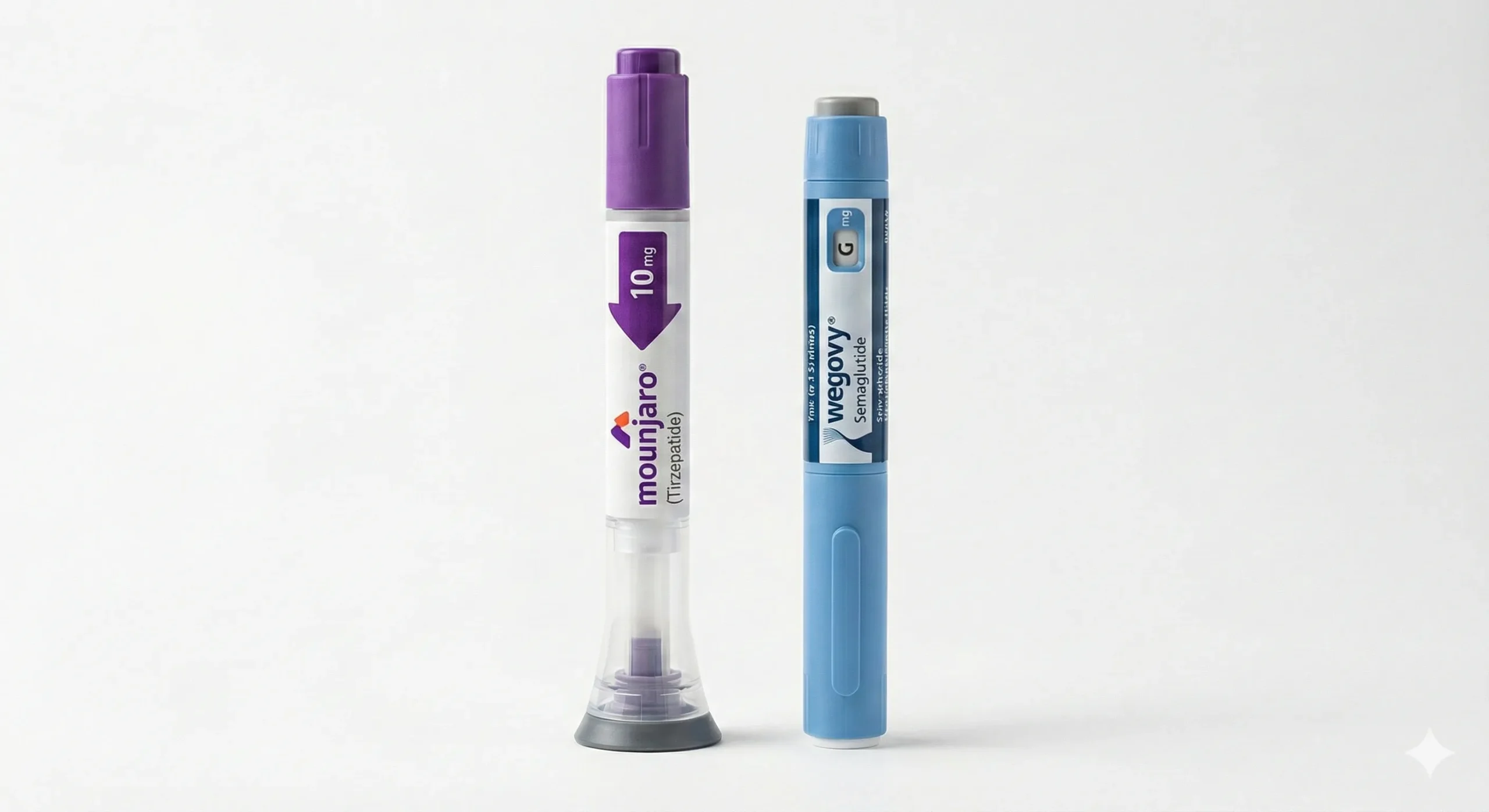
Wegovy is the brand name for semaglutide, a medicine given as a once-weekly injection from a pre-filled pen. It was licensed in the UK for weight management in 2021. It is a prescription-only medicine, which means nobody here can lawfully supply it to you until a prescriber has assessed you.
Disclaimer: PenCompare is an independent comparison platform. This guide is for information only. It is not medical advice, not a recommendation to take any medicine, and no substitute for an assessment by a qualified prescriber.
On this page
What Wegovy actually is
Wegovy is a trade name. The medicine inside it is semaglutide, and that is the word worth holding on to, because it is what tells you whether two products you are comparing contain the same thing. Semaglutide belongs to a class called GLP-1 receptor agonists.
It is supplied as a pre-filled pen and taken once a week, on the same day each week, by injection under the skin. Treatment starts at a low dose and increases in steps under the prescriber’s direction. That step-up is not a formality: it is how side effects are managed, and it is the reason the dose you end up taking is not something you pick from a price list. Our Wegovy dosage guide sets out the five strengths and the route to the maintenance dose.
Wegovy and Ozempic are not the same product
This trips people up more than anything else about semaglutide, and it is worth being exact about. The same ingredient is sold in the UK under two brand names, licensed for two different purposes.
-
Wegovy
Semaglutide licensed in the UK for weight management
The one a weight-management prescription refers to -
Ozempic
The same ingredient, licensed for type 2 diabetes and not for weight loss
Different strengths and a different pen, despite the shared ingredient
The practical consequence: a weight-management prescription in the UK is for Wegovy, not Ozempic. If you find a seller offering Ozempic for weight loss at what looks like a better price, you are not being offered the same product more cheaply. Treat it as a reason to check who you are dealing with, using our guide to buying medicines online safely.
How it works
Semaglutide imitates GLP-1, a hormone the body releases after eating. Acting on GLP-1 receptors in the brain, it increases the feeling of fullness and reduces hunger, and it slows the rate at which the stomach empties. The effect is that people tend to eat less without having to hold that decision in mind all day.
This is where it differs from tirzepatide, the ingredient in Mounjaro, which acts on GLP-1 and a second hormone called GIP. Acting on one receptor rather than two is not a weakness — it is simply a different medicine, with its own trial evidence and its own side-effect profile. Which one suits a given person is a clinical judgement.
What the clinical trials measured
The trials usually quoted are the STEP programme. In STEP 1, published in the New England Journal of Medicine in 2021, participants taking semaglutide alongside lifestyle support lost an average of about 15% of their body weight over 68 weeks. Around a third lost over 20%.
The same three cautions apply here as to any trial headline:
- It is an average. Individual results in the same trial ranged widely in both directions, and an average is not a forecast for any one person
- It was measured over 68 weeks with diet and activity support running alongside. Shorter treatment, or the medicine on its own, are not the conditions that produced it
- Trial conditions include monitoring and follow-up that ordinary treatment may not match
Comparing the 15% here against the figure quoted for tirzepatide is also less straightforward than it looks: the two came from separate trials, with different participants and different durations, so they are not a head-to-head result.
Who it is prescribed for in the UK
For weight management, semaglutide is generally considered for adults who meet a body-mass-index threshold:
- A BMI of 30 or above
- A BMI of 27 or above together with a weight-related health condition, such as raised blood pressure, raised cholesterol or type 2 diabetes
Meeting a threshold is where an assessment starts, not where it ends. A prescriber also has to consider your medical history, any other medicines you take, and whether treatment is appropriate at all. There are people for whom it is not.
At a glance
- Active ingredient: semaglutide
- Form: pre-filled pen, injected under the skin
- Frequency: once weekly, same day each week
- Class: GLP-1 receptor agonist
- Legal status: prescription-only medicine (POM)
- Average weight change in STEP 1: about 15% over 68 weeks
If you already have a prescription and want to see what UK providers charge, our Wegovy price comparison lists the complete cost for each dose, including consultation and delivery fees, alongside the date each price was last checked. We are a comparison service, not a pharmacy, and we do not supply medicines.
Frequently asked questions
Sources
- Wegovy summary of product characteristics, electronic medicines compendium
- Wilding JPH and others, Once-weekly semaglutide in adults with overweight or obesity (STEP 1), New England Journal of Medicine, 2021