Introduction
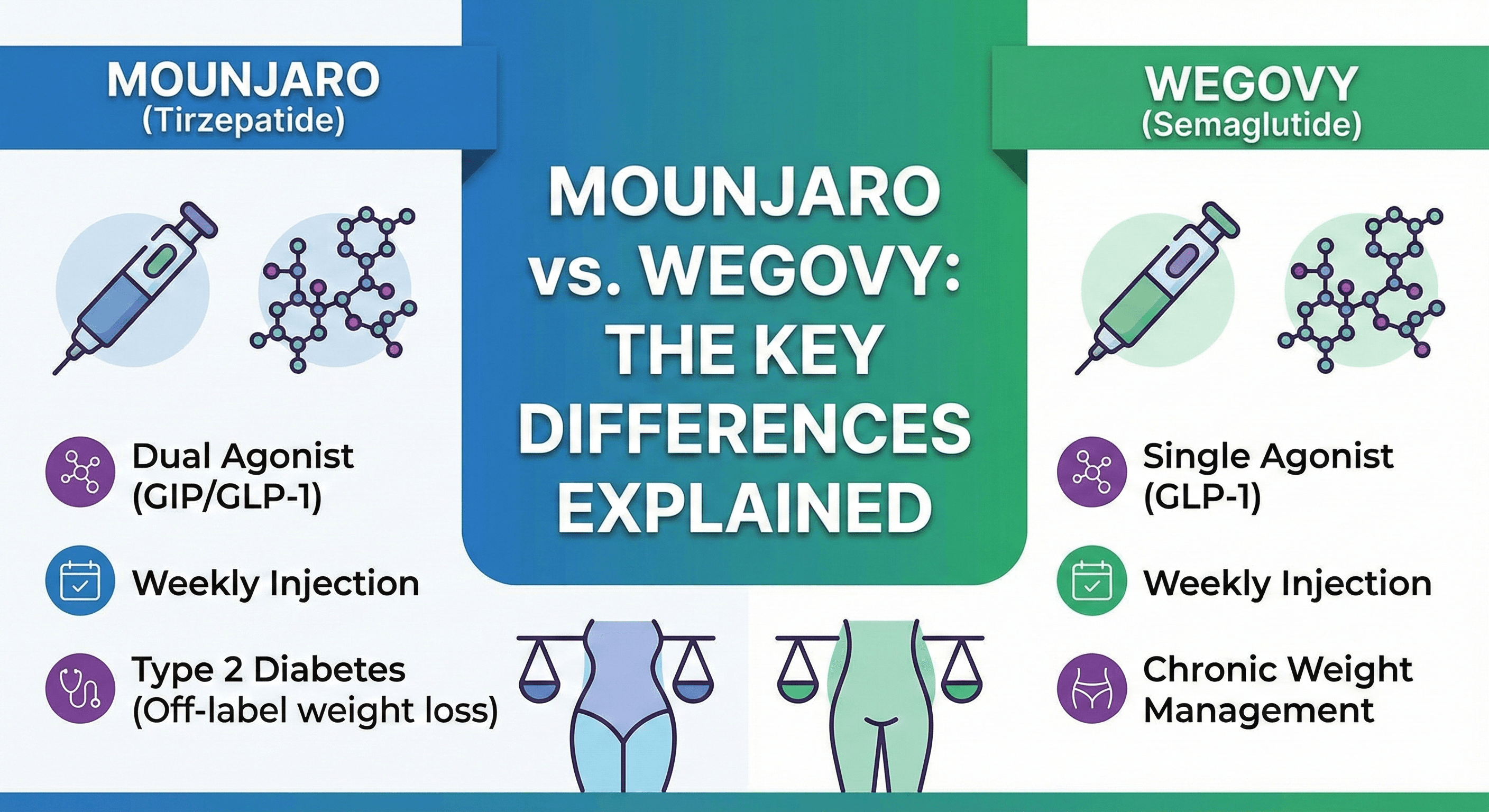
In the realm of modern medical weight management, two pharmaceutical titans have emerged as frontrunners: Mounjaro (Tirzepatide) and Wegovy (Semaglutide). Both medications have revolutionized the treatment of obesity and chronic weight management, offering results previously seen only with bariatric surgery. However, determining which option is best suited for your individual health profile requires a nuanced understanding of their distinct biological mechanisms, clinical efficacy, and potential side effects. This guide provides an authoritative comparison to help you navigate your options.
Mechanism of Action: How They Work
While both drugs harness the power of the body's natural hormone systems to regulate appetite and blood sugar, their approaches differ significantly.
Wegovy: The GLP-1 Receptor Agonist
Wegovy utilizes Semaglutide, a potent GLP-1 (glucagon-like peptide-1) receptor agonist. GLP-1 is an incretin hormone naturally released in the gut after eating. Wegovy works by:
- Signaling Satiety: It targets receptors in the brain to reduce hunger and cravings.
- Slowing Gastric Emptying: It delays the movement of food from the stomach, prolonging the feeling of fullness.
- Regulating Glucose: It stimulates insulin release in response to high blood sugar levels.
Mounjaro: The Dual GIP/GLP-1 Agonist
Mounjaro features Tirzepatide, a first-in-class dual agonist. It mimics the action of two incretin hormones: GLP-1 and GIP (glucose-dependent insulinotropic polypeptide). This synergistic "twincretin" effect offers a broader metabolic impact:
- Enhanced Satiety: The combination of GIP and GLP-1 receptor activation may produce a more robust reduction in appetite.
- Improved Fat Metabolism: GIP activity is believed to enhance the body's ability to break down fat and improve insulin sensitivity directly in adipose tissue.
- Dual Hormonal Action: By targeting two pathways simultaneously, Mounjaro often achieves superior glycemic control and weight reduction compared to single-agonist therapies.
Clinical Efficacy: What the Data Shows
Rigorous clinical trials have established the effectiveness of both medications, but head-to-head comparisons reveal distinct performance tiers.
Wegovy (STEP Trials)
The STEP clinical trials demonstrated that Wegovy (2.4 mg) leads to substantial weight loss. Participants achieved an average reduction of approximately 15% of their initial body weight over 68 weeks. This marked a significant advancement over previous anti-obesity medications.
Mounjaro (SURMOUNT Trials)
The SURMOUNT clinical program highlighted the superior potency of Tirzepatide. In the SURMOUNT-1 trial, participants on the highest dose (15 mg) achieved an unprecedented average weight loss of 22.5%. Furthermore, a substantial percentage of participants reached weight reduction milestones comparable to surgical interventions.
Dosing Protocols and Administration
Both medications are administered via subcutaneous injection once weekly, but their titration schedules differ.
Wegovy Dosing Schedule
Wegovy follows a strict dose-escalation path to mitigate gastrointestinal distress, typically taking 5 months to reach the therapeutic maintenance dose of 2.4 mg.
Mounjaro Dosing Flexibility
Mounjaro offers six dosage strengths (2.5 mg to 15 mg). This granularity allows healthcare providers to tailor the maintenance dose more precisely to the patient's tolerance and efficacy response, potentially allowing for effective management at lower doses (e.g., 5 mg, 10 mg) without mandating the maximum strength.
Side Effect Profile and Safety
Given their shared mechanism involving delayed gastric emptying, the side effect profiles are similar. Common adverse events include:
- Gastrointestinal Issues: Nausea, diarrhea, vomiting, and constipation are the most frequently reported.
- Transient Nature: These effects are usually mild-to-moderate and tend to subside as the body adapts to the medication.
It is crucial to consult a healthcare provider regarding potential contraindications, such as a personal or family history of medullary thyroid carcinoma or Multiple Endocrine Neoplasia syndrome type 2 (MEN 2).
Published in Comparison